Google Cloud announced the Gemini agent on October 8, 2026, at Gemini at Work 2026, describing it as a single, universal agent for work. The news came in a keynote by Google Cloud CEO Thomas Kurian. According to Google, work now starts in the prompt window: Gemini answers questions, handles knowledge work, creates images and media, and writes and runs code, all through one agent and one API. You give it an objective instead of step-by-step instructions, and come back to finished work.
The agent plans the work itself, uses skills and tools, connects to company systems and delivers a finished result inside the documents, inbox and developer environments people already use. It can act as a personal assistant, or as a team member working on behalf of a group, such as a project manager, or on behalf of a role, such as an analyst in the finance department.
How it is built
- One agent for everything: you can chat with it, assign it work it completes on its own, schedule tasks or have it respond to events, all from the same interface.
- Available everywhere: on the web, iOS and Android, Windows and Mac, and in channels such as the command line, Google Workspace, Microsoft 365 and Slack. It can also be built into third-party apps and run headless, without its own interface.
- Keeps working after you close the laptop: it runs in the cloud with one set of memory and context across devices, and jobs that take hours or days keep running.
- A team of agents: Gemini can create temporary sub-agents, each with its own identity, and coordinate tasks that run in parallel or in sequence.
- Model choice: the agent and the model are separate choices. Today it orchestrates across Gemini models and Anthropic’s Claude models, with other private and open models planned, and runs each job on the model that fits it best.
Google also describes coworker agents: agents with a persistent role, their own @agents.company.com email address, their own storage, and access only to the context a team gives them. To learn the business, Gemini connects to tools such as Confluence, Microsoft Office, Teams, Slack, Git, Jira, Salesforce, ServiceNow, BigQuery, Databricks, Postgres and Snowflake, to files on your desktop, and to any MCP server inside or outside the corporate network. Teams can publish tools and skills to shared company registries. The agent keeps four kinds of memory: session memory for the current task, a knowledge base it builds from documents and conversations, procedural memory that includes skills it writes for itself, and a record of everything it has done before.
Inside Gmail, Docs and Sheets
In Google Workspace, the agent works directly in Gmail, Drive, Docs, Slides, Sheets, Chat and Calendar. In Google’s example, you can ask it to set up a meeting with “the usual team” next week without giving a single name or email address: it figures out who they are from the chat space and the last thread, checks calendars and starts an email thread to find a time, including with external participants. When a manager emails asking for an update as a slide deck, Workspace flags it as a task you can delegate and offers a one-click handoff to Gemini. A coworker agent created for a team gets a full Workspace account, with email, calendar, Drive and a directory listing, and acts under its own identity rather than yours.
Data, industries, security and cost
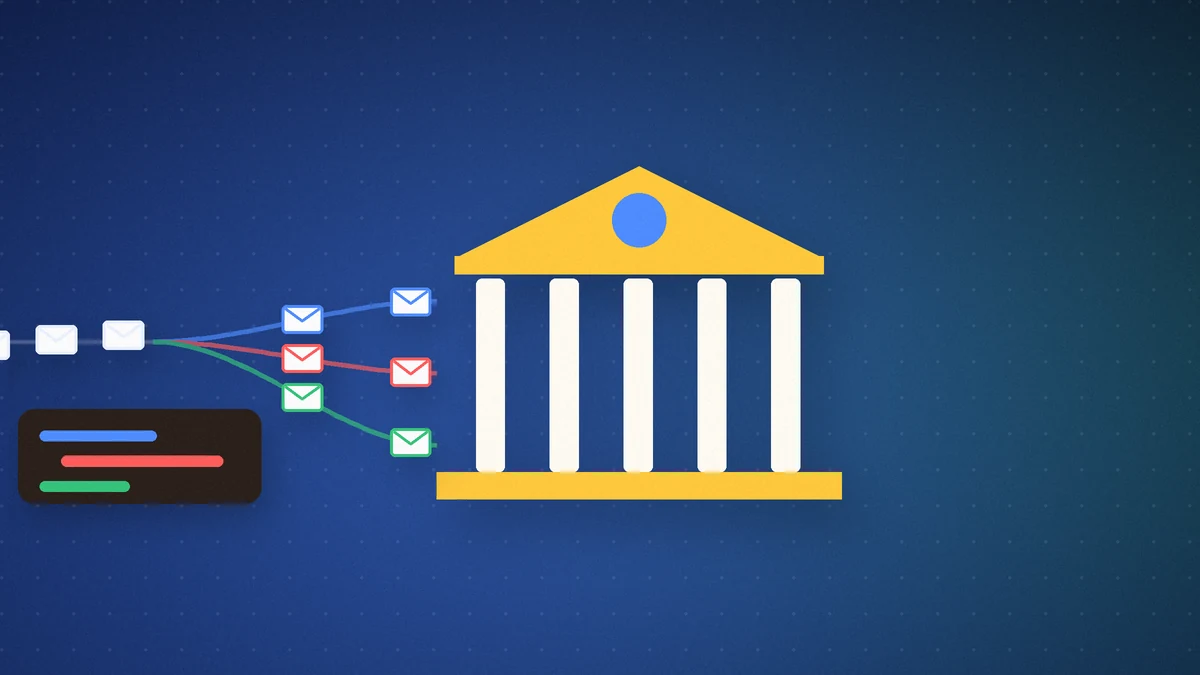
For data engineers, Gemini writes PySpark code, trains models and fixes pipeline issues. Business users can ask for operational reports from BigQuery, and a saved report can be rerun without token costs. Industry versions are now in preview for financial services and legal, with government, healthcare and retail coming soon. On security, every agent gets an attested identity with least-privilege permissions, every action goes to an audit trail under the agent’s name, and agents run inside an Agent Sandbox, with all traffic passing through Agent Gateway, an AI network firewall that enforces company policy. On cost, there is smart routing between models and real-time spend caps in the Cloud Billing Console: when a project hits its cap, its agent pauses until someone resumes it.
Google says nearly 500 Google Cloud customers each processed more than one trillion tokens over the past year, and nearly 90% of the Fortune 100 use Gemini Enterprise. Customers Google names include BNP Paribas, Bradesco, Orange Spain and Ryanair.
What it means for you
- Who is affected: mainly organizations on Google Cloud and Gemini Enterprise. Google’s post does not give a separate price or a general availability date for the Gemini agent, beyond the preview for financial services and legal.
- What to do now: if you run IT, review the controls Google is pitching, such as spend caps, audit trails and Agent Gateway, before you let agents run unattended for days.
- Regional availability: Google did not list availability by region in the announcement. European examples in the post include BNP Paribas, Commerzbank, Lloyds Banking Group and Ryanair; EU and UK teams should confirm data-processing terms under GDPR before connecting personal data.
- Want the bigger picture on Gemini? Plans, USD pricing and use cases are in our complete Gemini guide, and more updates are in AI News.
Sources
- Google Cloud Blog: Welcome to Gemini at Work 2026: Introducing the Gemini agent, Thomas Kurian, October 8, 2026
- Google, The Keyword: Google Cloud introduces the Gemini agent, October 8, 2026

