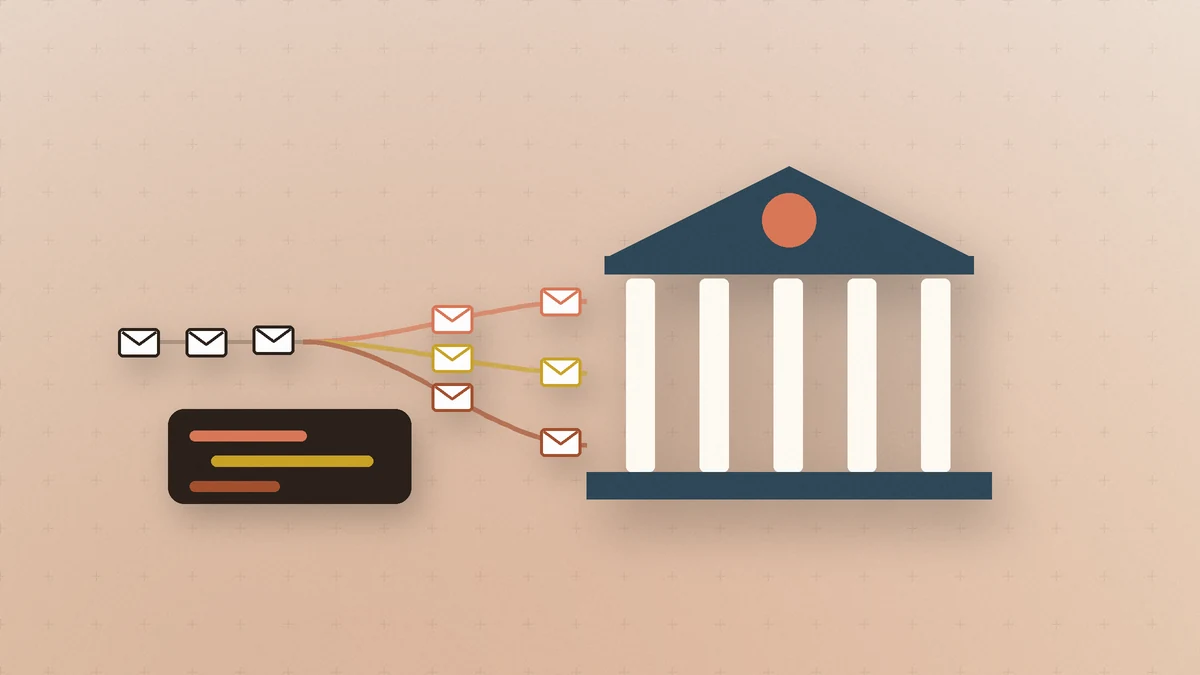
On October 1, 2026, Anthropic announced an expanded collaboration with Barclays, the British universal bank. According to the post, Claude is being rolled out more deeply for software development, legacy modernization and operational efficiency, inside a secure and governed environment.
For current plans, prices and every Maitz article on Claude, see our Claude hub.
The headline target is Claude Code: Barclays expects adoption to reach 50% of its developer population by the end of 2026, and a majority of software engineers in 2027. That is the bank’s forecast, not an independently audited metric.
Where Claude already runs
Since 2025, Barclays UK has run a Colleague Knowledge Assistant powered by Claude with a retrieval-augmented generation setup. Anthropic says more than 16,000 colleagues have adopted it, and that it has handled more than one million searches, supporting a retail base of more than 20 million UK customers.
In Global Markets, Claude models help classify, enrich and route incoming emails. The platform processes about 120,000 emails a day, with the aim of cutting manual handling and helping teams act on the right information faster.
Security and oversight
Both sides stress governance, security controls and human oversight. Paul Smith, Anthropic’s chief commercial officer, called the rollout a UK milestone and repeated the same figures: 16,000 colleagues, 120,000 emails a day, and most engineers on Claude by 2027.
What to take from it
This is not a new model launch. It is a story about enterprise deployment inside a large, regulated bank. The lesson is practical: value shows up in production knowledge search, queue triage and coding agents, not only in demos. If you are building agent workflows, our Claude Code beginner guide is a concrete starting point. More updates are in AI News.
What the bank says
Anne Marie Darling, Group Co-Chief Operating Officer at Barclays, said the true measure of any technology is its impact on customers, clients and colleagues, and that expanding Claude is about transforming how work gets done: less time on routine activities and faster decisions, so colleagues can focus on more complex problems. Craig Bright, her fellow Group Co-COO, said software engineering and cybersecurity are being reshaped by increasingly capable AI, and that the bank is moving toward agentic AI embedded in how it builds, tests, secures and operates technology. He said Barclays is using Claude to modernize legacy platforms and improve software quality.
In Global Markets, according to the announcement, Claude does more than sort email: it helps prioritize requests and check that they contain the information operations colleagues need to act. Both companies frame the expansion as part of Barclays’ long-term commitment to improving productivity, resilience and customer outcomes.
What it means for you
- Barclays customers in the UK: the announcement describes internal tools that help staff answer faster. It does not describe a customer-facing chatbot.
- Enterprises in regulated sectors (US, EU, UK): the rollout is an example of deployment with governance, security controls and human oversight for each use case. No pricing or contract terms were disclosed.
- Developers: the 50% target is about Claude Code. For Claude plans and prices in USD, including Claude Code, see our Claude guide.
- What to watch: whether Barclays reaches half of its developers on Claude Code by the end of 2026.
Sources
- Anthropic, official newsroom: Barclays scales Claude to upgrade operations and improve client experience, October 1, 2026

