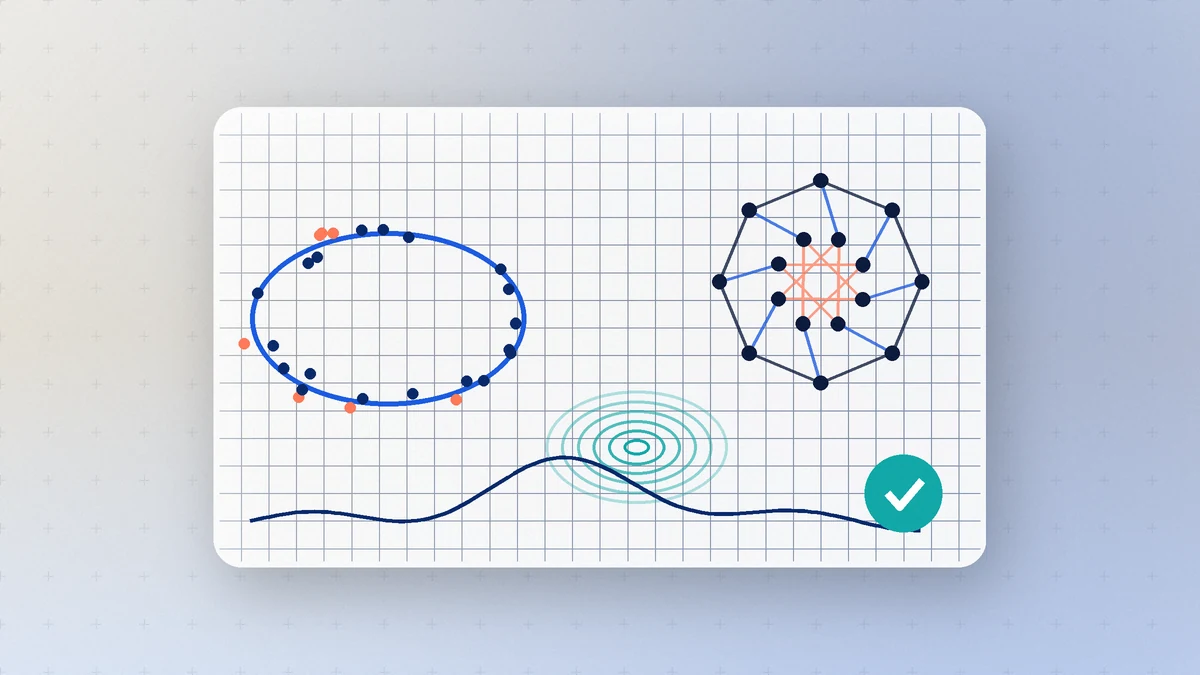
On October 2, 2026, Meta published six mathematics papers produced through a collaboration between mathematicians and Muse Spark, the company’s AI model. According to Meta, five of them present answers to research questions that had been open, in areas including probability, differential equations, group theory and optimization.
The surprising detail is the tool. Meta says the researchers used Muse Spark 1.1 and 1.2 in Thinking Mode through the regular meta.ai chat interface. No custom research setup was built around the model.
The ground rules
Meta lists four principles behind the collaboration:
- A team of mathematicians led the research and worked with the model to explore ideas and develop the arguments.
- A second group of mathematicians reviewed the work.
- Each paper marks which passages were drafted mainly by the researchers and which by the AI.
- Each paper credits the earlier research it builds on.
Who did what
The division of labor varies from paper to paper. In group theory, Muse Spark wrote a search program in GAP, a mathematical software system, and the program found a counterexample: a group with 384 elements that disproves a 2024 conjecture stating that every “semiabelian” finite group is also “monomial.” The researchers verified the result and completed the argument.
In the paper on the mass-critical biharmonic nonlinear Schrödinger equation, the researcher chose the problem and the key proof ideas, and the model helped with calculations and with testing arguments. Meta says the result settles a question left open since 2015 and confirms a prediction made from computer simulations in 2002: waves of a certain kind must collapse in finite time. In a paper linking number theory with p-adic string theory, the model drafted three of the core technical sections, which the researchers then checked, corrected and refined.
They were not alone
Meta itself notes that after finishing the work, it learned that other teams had independently announced solutions to some of the same problems using different approaches. For the Gaussian ellipsoid fitting problem, three other works were posted in August 2026. In group theory, an AI agent called Nilradical reported a different counterexample to the same conjecture on September 16. Meta acknowledges this work in the papers themselves.
How to read the Muse Spark papers
The announcement does not say an AI model solves mathematics on its own. In every case, mathematicians chose the question, led the work and checked it. What it does show is that a publicly available chat model can serve as a working partner in real research, as long as an expert is there to verify each step. It is also worth remembering that Meta published these papers itself, and their real weight will be decided by the mathematicians who read and test them.
The same principle applies outside academia: a model’s output is a starting point, not a proof. If you want to build the habit of checking claims against the original source, our guide to fact-checking viral claims shows how. More updates are in AI News.
Sources
- Meta AI Research, official blog: Solving Open Research Problems Together, October 2, 2026
- Meta AI Research, publication page: String Two-Point Function = Height Function on a Curve, October 2, 2026

