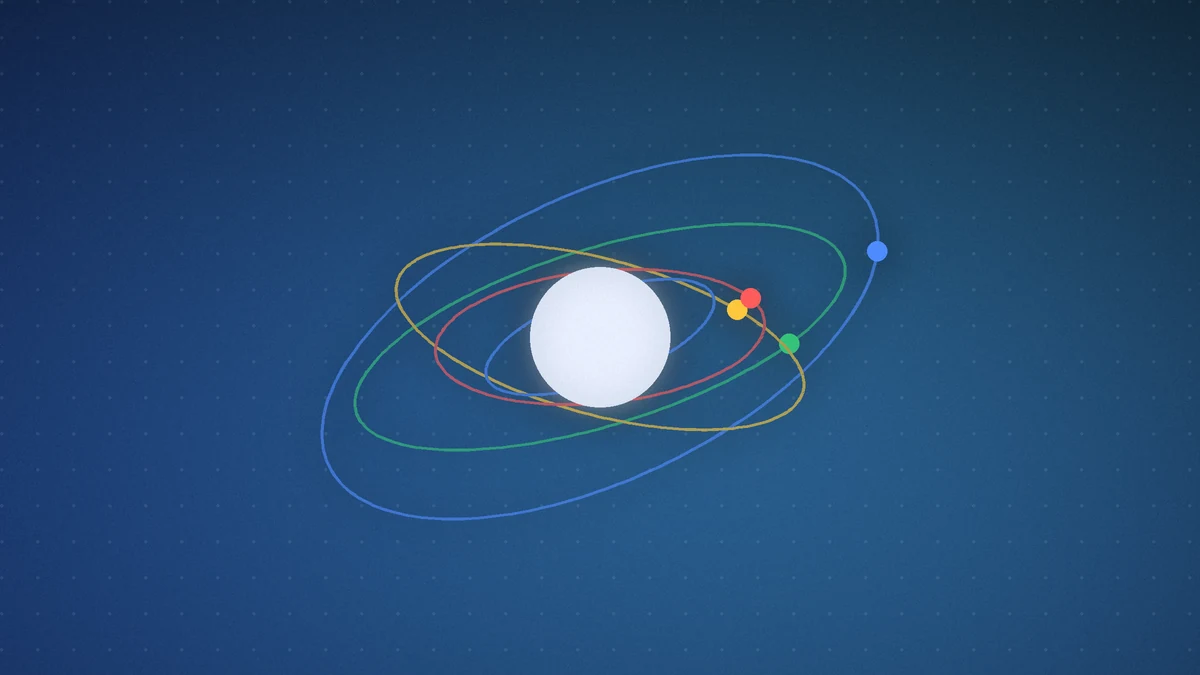
Google reports that its Project Suncatcher prototype satellite launched into orbit on October 1, 2026, aboard SpaceX’s Transporter-18 rideshare mission, built in partnership with Planet. The team has confirmed contact, and the satellite is operating as expected.
This is the first step in a long-term research moonshot: whether space could one day host scalable machine learning infrastructure. Over the coming weeks, Google will gather in-orbit data on how its TPUs handle launch stress and the radiation and thermal extremes of space.
What this mission is testing
Per the official post and the project facts page, this flight is a research test, not an operational orbital data center. The goal is to see what works and what fails before scaling up. A peer-reviewed paper on the research behind the mission is now available in Joule.
In low Earth orbit, satellites can tap near-constant sunlight and generate up to about eight times more solar power than on Earth. That energy advantage is one reason Google is exploring spaceborne compute at all.
TPUs, radiation, and cooling
Before launch, TPU chips (including the Trillium line) were shaken to mimic rocket vibration and exposed to radiation in a proton beam facility. Google says early results showed Trillium TPUs held up well to a total ionizing dose greater than a five-year mission would deliver. Some conditions can only be measured in orbit, which is why the prototype is flying.
Cooling is another hard problem: there is no airflow in vacuum, so heat must leave through radiators and dedicated thermal paths. The team has already tested approaches in a thermal vacuum chamber and will now see how the TPU cooling system behaves in space.
What is planned for 2027
Future designs call for satellites that each carry dozens of TPUs and fly in clusters. To keep high bandwidth between nearby craft, they would link with short-range, high-bandwidth lasers. In 2027 Google plans to test two satellites with those laser links. That remains a research milestone, not a commercial rollout.
How to read this
This is the start of hardware experiments in space, not a live orbital data center. For more Google research coverage on this site, see Gemini 4 Argon, our piece on DeepMind’s SynthID Bio, and updates in AI News.
Sources
- Google, Our Project Suncatcher prototype satellite is in orbit: blog.google/innovation-and-ai/models-and-research/google-research/project-suncatcher-prototype/
- Google, Behind Project Suncatcher, our moonshot to put AI in space: blog.google/innovation-and-ai/models-and-research/google-research/google-project-suncatcher-facts/

