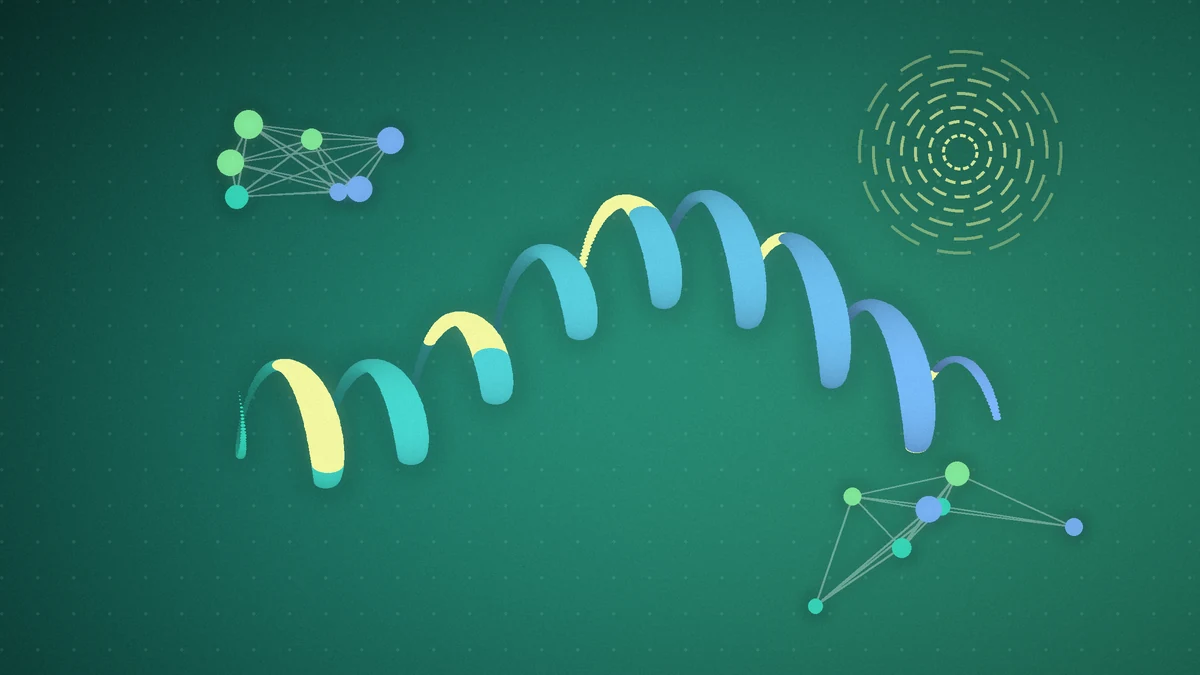
On September 30, 2026, Google DeepMind announced SynthID Bio, an extension of its SynthID watermarking technology into synthetic biology. According to the company, the method embeds an imperceptible signature directly in the biological code, so the mark can be verified not only on a digital model but also on the physical protein synthesized in a lab, without harming biological function in the tests they report.
The context is clear. Models such as AlphaFold and AlphaProteo help predict and design new proteins, and there is already work on AI-designed bacteriophages. The same capabilities make DNA synthesis screening and the integrity of public structure databases harder, because a wholly new sequence no longer looks like a known natural organism.
How it works
SynthID Bio is a family of methods, not a single tool. For sequences it gently steers amino-acid choices; for 3D structures it adjusts atomic coordinates. DeepMind says those adjustments did not compromise protein function in experiments.
For protein binders, the team used AlphaProteo with a SynthID Bio-enabled version of ProteinMPNN. In wet-lab tests on three targets (VEGF-A, the SARS-CoV-2 spike RBD, and PD-L1), watermarked designs matched the hit rate, binding affinity and sequence diversity of unwatermarked versions. For protein folding, DeepMind fine-tuned a small part of AlphaFold 3’s diffusion network so the predicted coordinates themselves carry a detectable signature.
Why it matters for biosecurity
DeepMind places SynthID Bio as one more verification layer in a layered defense model: DNA order screening, model-level mitigations and customer checks. A clear watermark can help synthesis providers see that an order came from a trusted model with built-in safeguards, and spare exhaustive manual review of every unfamiliar sequence. The same idea could help label synthetic entries in databases such as the PDB, UniProt and GenBank.
The company stresses that no single safeguard is enough, and that robustness against deliberate removal still needs work. In a collaboration with the Hie lab at Stanford and Arc Institute, SynthID Bio was integrated into the genomic model Evo 2 to watermark a bacteriophage; DeepMind says early tests in bacterial cultures confirmed the watermarked phages were functional.
What is open to the community
DeepMind is publishing a methods paper, open-sourcing code and in vitro data, and releasing weights for research. For partnership ideas it points people to synthidbio@google.com, asking them not to share confidential details in the first message.
For everyday chat and agent users, nothing changes tomorrow. For the industry, the signal is clear: as AI designs biology, provenance and tracking layers have to keep up. If you care about what systems see in your own data, start with our Grok Bot privacy and security guide. More updates are in AI News.
Sources
- Google DeepMind, official blog: Introducing SynthID Bio, September 30, 2026

