The Choice Starts Before You Get In
A car can be a way to reach a mission, a means of escape or something you decide to keep for yourself. In GTA 6, according to explanations shared by the game’s developers, those decisions carry additional weight. The question goes beyond how fast a particular model is, extending to choices that come before and after the drive: what is accessible right now, what is worth keeping and what you should let go.
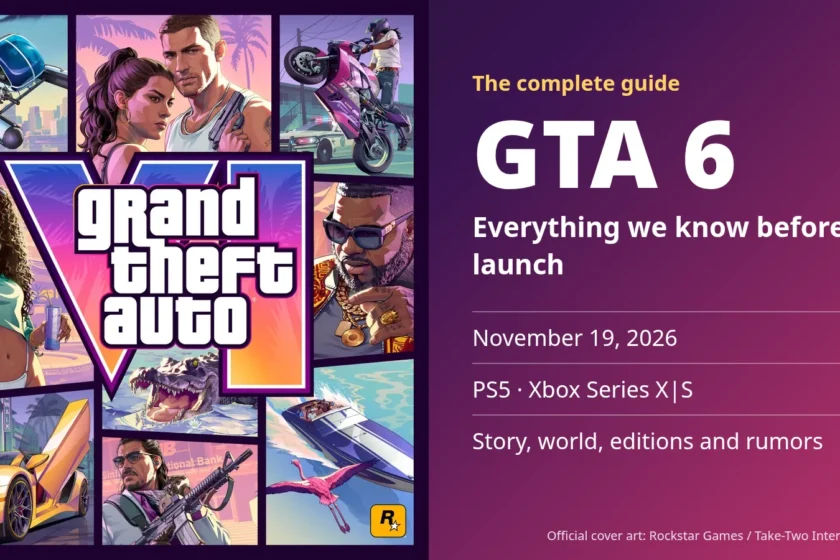
This article is part of our complete GTA 6 guide, which collects all of our coverage of the game.
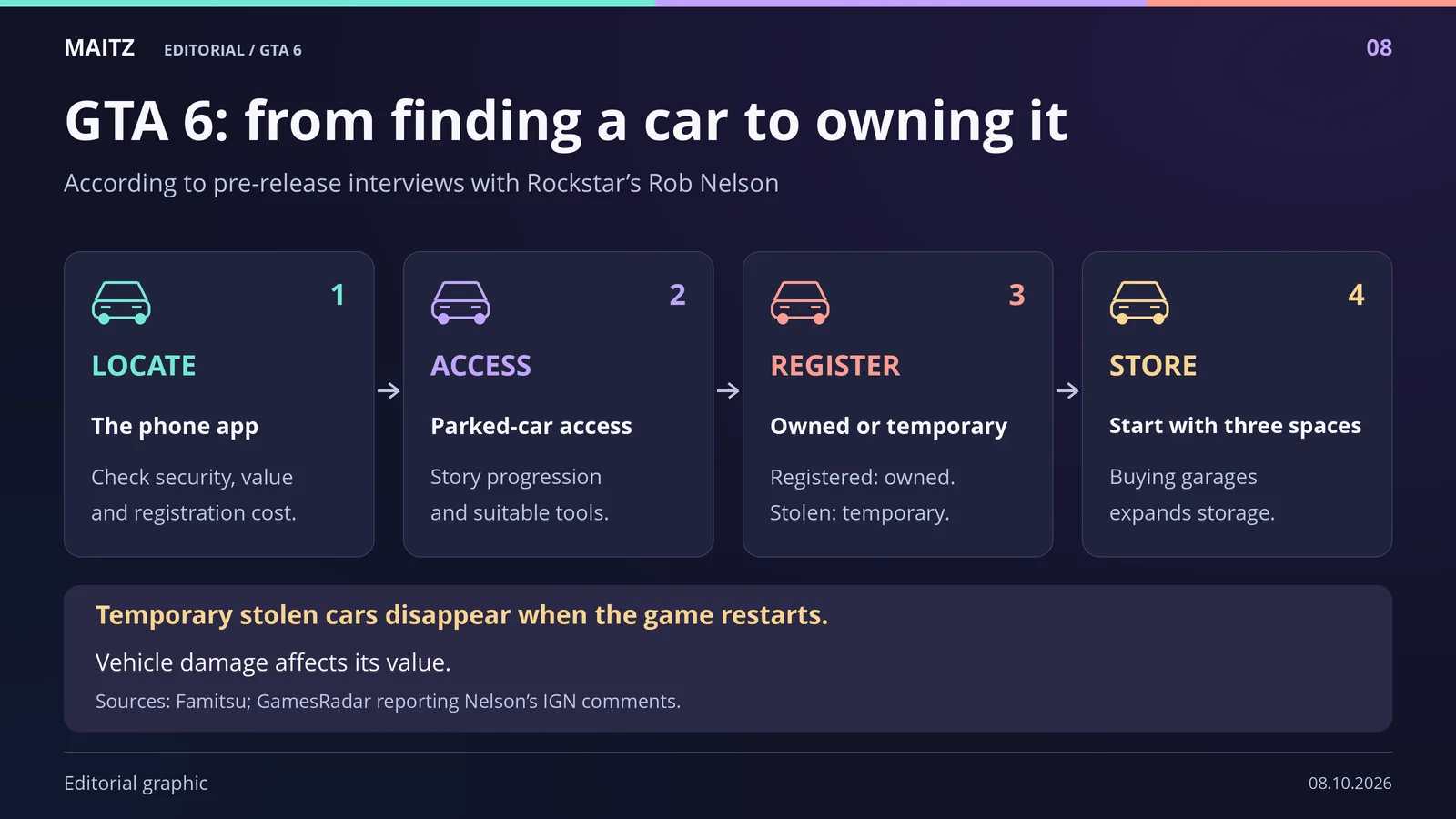
In a GamesRadar article reporting comments made to IGN by Rockstar North’s Rob Nelson, he describes parked cars that require story progression and acquiring suitable tools to access. A phone app displays information about a vehicle, its security, its value and the cost of registration. This is a description of a game system shared ahead of release, rather than a finding from our own independent testing.
From a design perspective, that information could turn a parking lot into a place for making choices. Rather than treating every car as an instant solution to the same problem, players could weigh an opportunity against a limitation. The interesting question is whether that assessment will be quick and clear enough to fit GTA’s pace, or demand more attention than a player wants to give it at that moment.
Finding a Car and Deciding to Keep It
In his direct interview with Famitsu, Nelson detailed the ownership side: players start with space for three vehicles, and buying garages allows them to expand storage. He distinguished between a registered vehicle owned by the player and a stolen car that remains available temporarily. In the latter case, he explained, the car disappears when the game is restarted.
That detail gives the word “mine” a practical meaning. A car we take a liking to along the way could become a permanent part of our routine, but limited space means making choices. You can imagine one player preferring to keep a useful vehicle for missions, while another is willing to make room for a car simply because they like it. These are examples of choices the structure might encourage, without prejudging which models will prove more successful.
Nelson also explained in that interview that damage affects a car’s value. That introduces another consideration: reckless driving might be a quick way to resolve a situation, but a player hoping to sell the vehicle has a reason to bring it in good condition. The tension between moving freely and preserving value could add interest even to the short trip between finding a car and handing it over.
Familiar Names Are No Substitute for a Road Test
Rockstar has also published vehicle names in its edition materials, including the ’95 Grotti Cheetah, Shitzu Squalo and ’67 Vapid Dominator Buggy. These items appear in the Ultimate Edition description. Their inclusion does not establish a performance ranking, explain every way to obtain them or provide a complete catalog of the game’s vehicles.
It is therefore worth separating two questions when reading reveals. “Which car has been confirmed?” is a question about content. “How does it feel on the road?” is a question about the driving experience. An attractive image or a familiar name can answer the first; the second requires time with the game and comparable conditions, such as the road, damage and upgrades.
The interesting promise of the vehicle system is the connection between finding, choosing and owning. If those elements work together, even a car that is neither rare nor expensive could develop a small story of its own. The test at launch will be how many of those decisions feel natural, and how quickly you can get back to driving when all you wanted was to reach the other side of town.